amoli
The first days.
Amoli is slow the way a darkroom is slow — something is developing.
Most apps promise everything in the first minute. Amoli reads your whole library, photograph by photograph, with a model that lives on your phone — and that honestly takes days, not minutes. Here is what those days are actually like, and why they're worth it.
❧Minute one
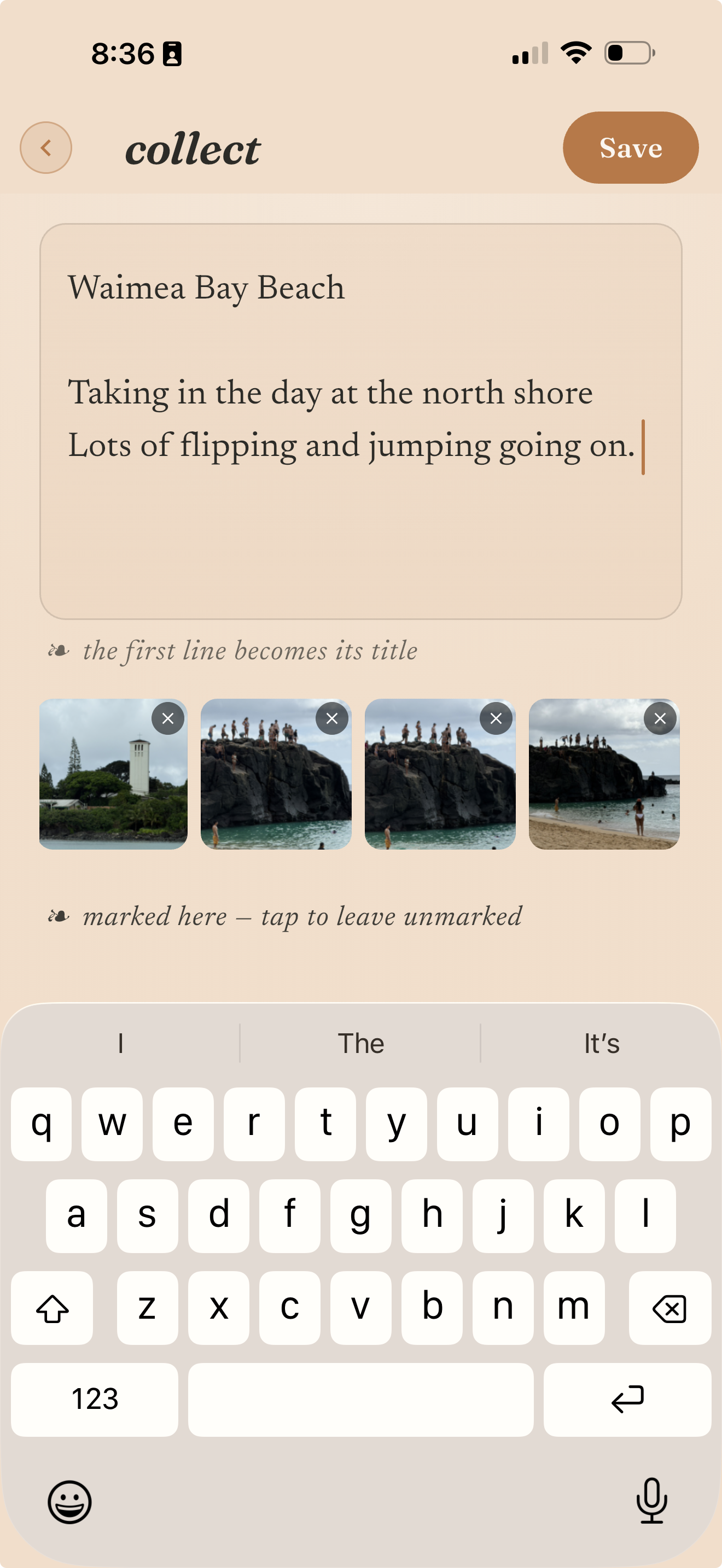
The journal works immediately. Collect a moment as it happens — photographs, and words in your own hand. Browse everything you've ever kept. Name a face. Nothing waits on the reading; the readings deepen behind you while you simply use it.
❧Night one
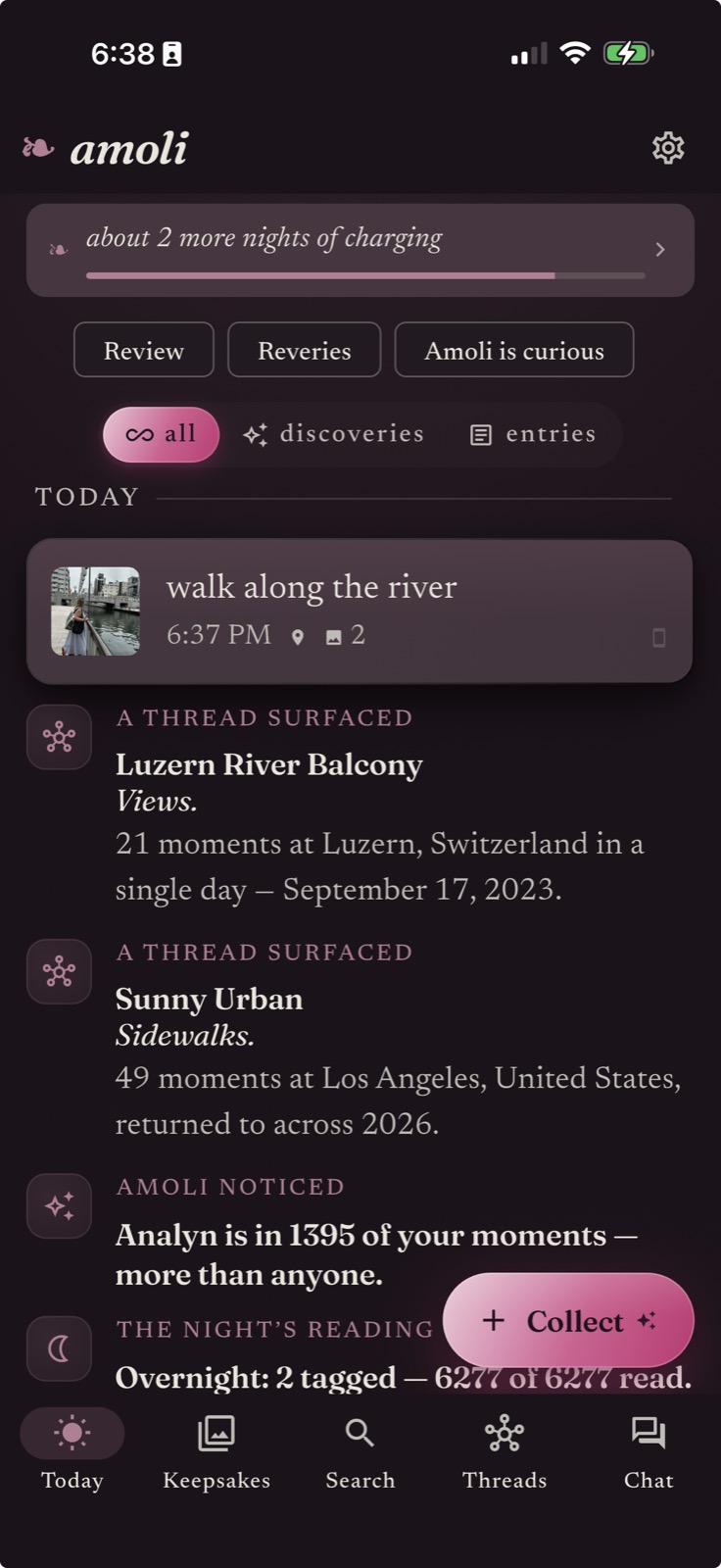
Leave the phone on its charger. Amoli reads while you sleep — its first note on each photograph takes a few seconds, hundreds an hour; the longer readings follow behind, newest first. In the morning, Amoli tells you plainly what it read. Its own honest counter, every day, until the library is done.
❧The first week
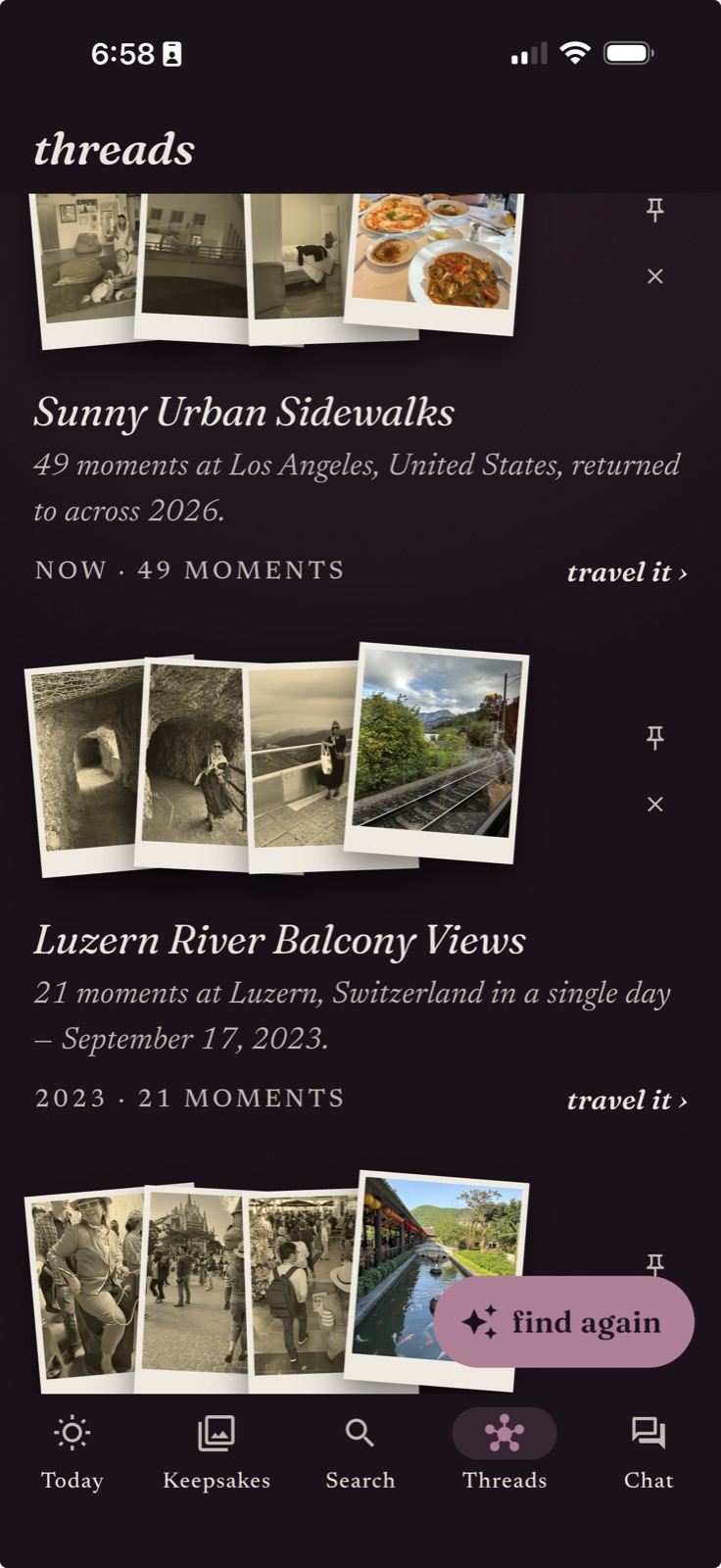
The library starts answering back. Threads surface — a café, a trail, a friendship, followed across years. Factoids appear about your own life. The first reveries arrive. Every named face reaches further back into everything already read.
❧Once, and done
The costs are one-time and stated plainly: a model download of about 4 GB over Wi-Fi, and a whole library read over a few plugged-in nights — a 14,000-photograph library takes about three. Then it is done, for as long as you keep Amoli; new moments are read as they arrive.
Why it is this way
The slow part is the privacy. A server farm could read your library in an hour — by taking your library. Amoli's refusal to do that is not a settings toggle; it is the architecture. The model lives on the phone, so the phone does the reading, and the reading takes the time it takes. What you get for the patience is absolute: no account, no server, no analytics, nowhere for your memories to go. Read the policy — or just watch the network.
Priceless means not for sale — least of all your memories.