amoli
Inside — how it actually works.
"Nothing leaves your phone" is a claim every app makes. Amoli's version is checkable.
One model download, then the network goes silent. There is no account to create, no server to sign in to, and no analytics beacon — not "anonymized," not "aggregated": none. This page explains what is actually running, with real numbers.
The model
Amoli runs Gemma 4 E4B — a vision-and-text model of about 3.7 GB — directly on the iPhone, via LiteRT. It is downloaded once, from Amoli's own CDN, over Wi-Fi. Everything Amoli writes comes from this one local model: the readings, the conversation, the reveries, the lines on the cards. There is no "smart features require the cloud" footnote, because there is no cloud.
While you sleep
Amoli writes its first note on a photograph in a few seconds — hundreds an hour on current iPhones; the fuller readings follow behind, newest first — and it prefers to work while the phone charges. A 14,000-photograph library reads in about three plugged-in nights, then stays current on its own as new moments arrive. Every morning, Amoli reports plainly what was read; the counter is the app's own, and it is honest.
The pipeline
1It reads.
Each photograph gets a written account in plain words: who is there, where it seems to be, what is happening. The reading is stored on the phone, searchable, and yours to correct — your own words always outrank the model's.
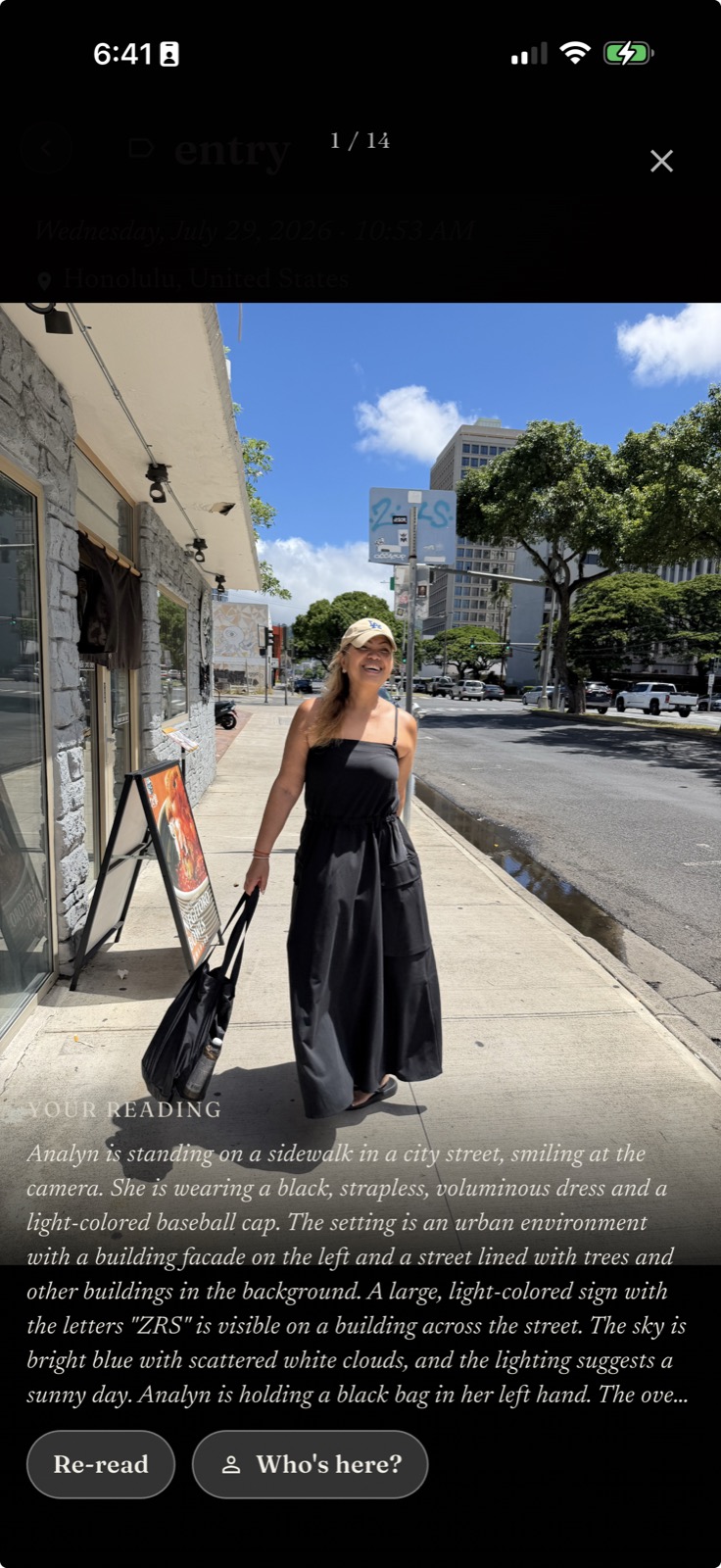
2You name.
Faces are matched on the device. Name one once and the name reaches backwards and forwards through everything read — readings, answers, threads, cards. The face data never leaves the phone either.
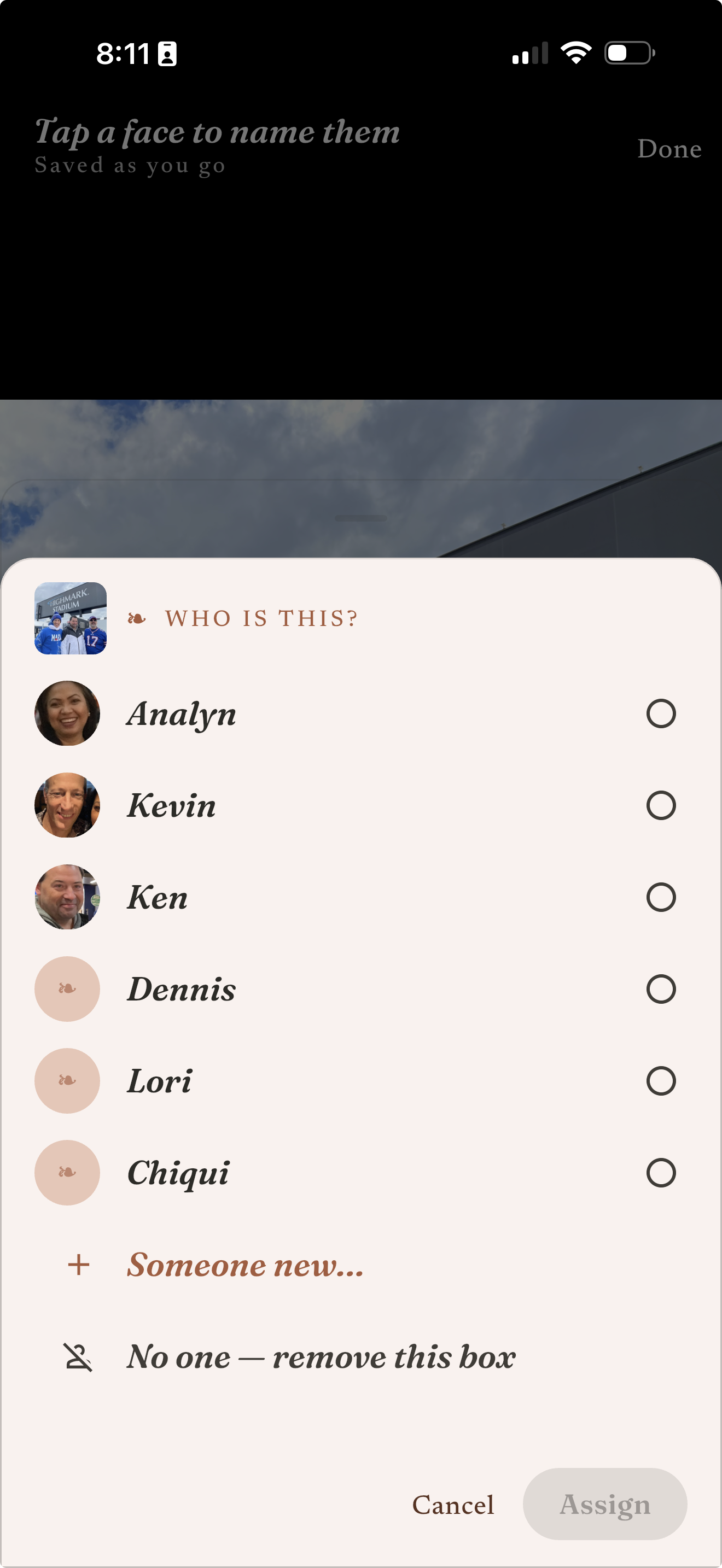
3It notices.
From the readings, Amoli surfaces the subjects that run through your days — threads followed across years, factoids about your own library, the patterns a reverie is made from. All of it is derived on the phone, from words the phone wrote.
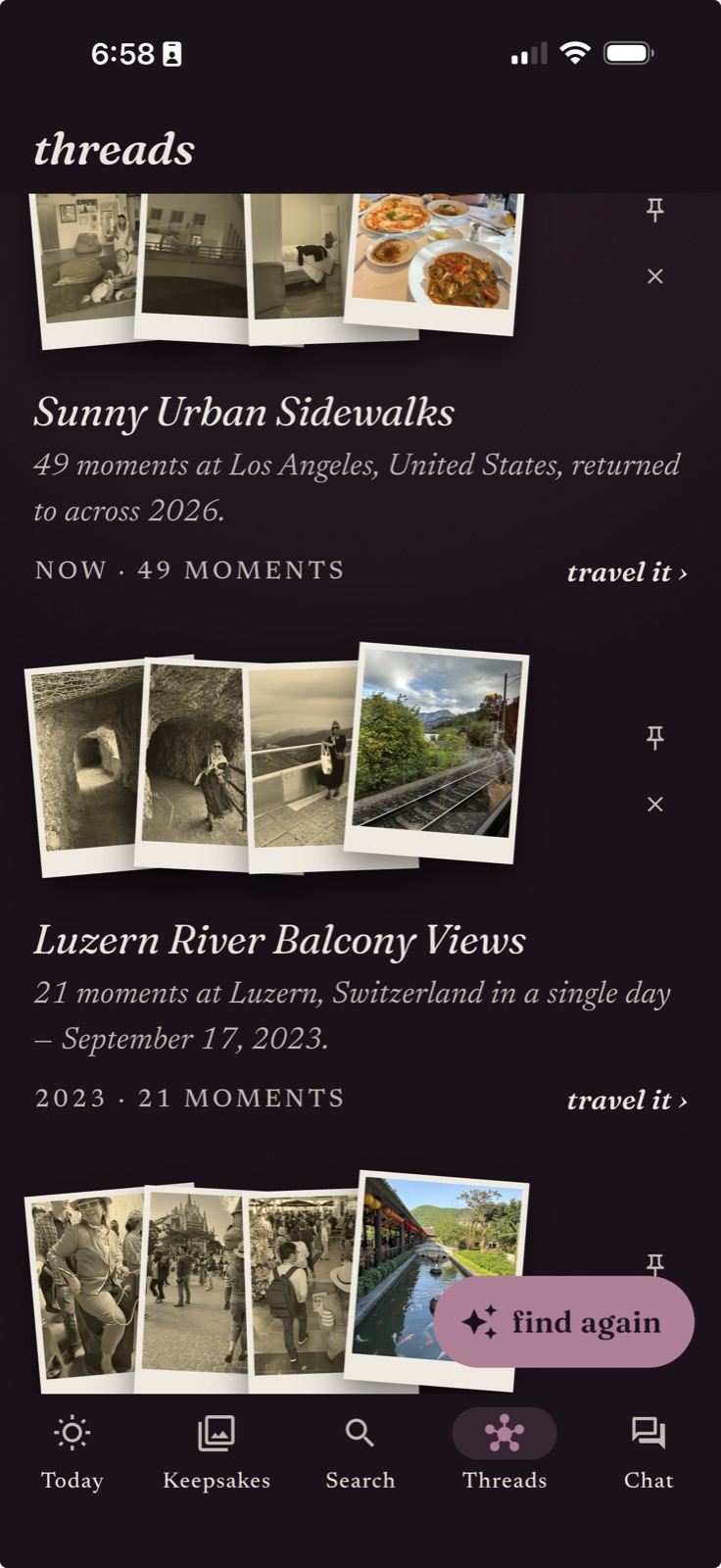
4It makes.
Cards, booklets, reveries — composed and typeset on the device, exported as ordinary files. Nothing leaves unless you send it, and what you send is a file you have already seen.

Check the claim
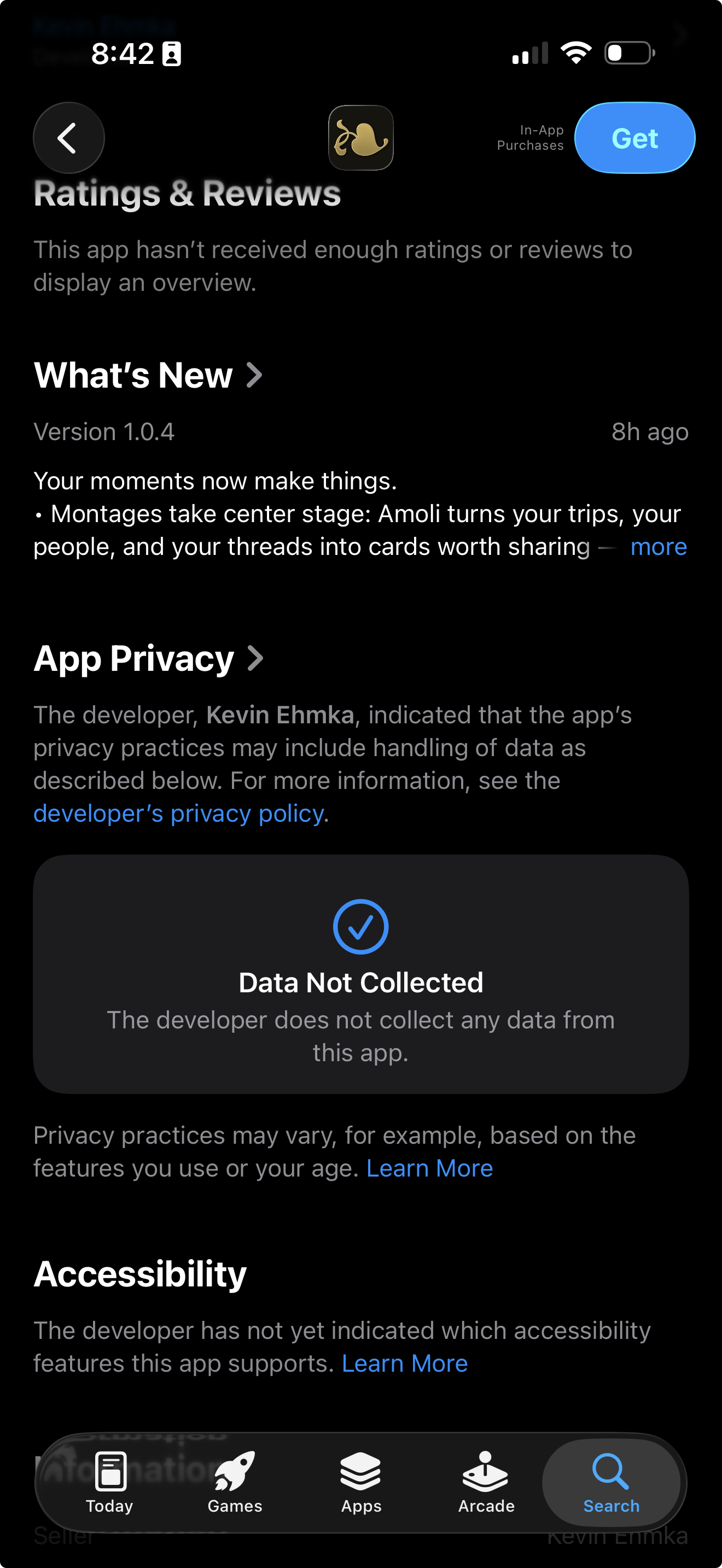
Two ways, neither requiring trust. First, the App Store privacy label: Data Not Collected — the strictest label Apple offers, and Amoli qualifies for it because there is nowhere for data to go. Second, watch the network yourself: proxy the phone through any traffic inspector, download the model, and then try to catch Amoli talking to anyone. It won't, because it can't — there is no server on the other end.
No account also means nothing to breach: your memories can't leak from a server that doesn't exist.
What it costs the phone
- An iPhone 15 Pro or later. The model asks a great deal of the processor and memory; Amoli launches on the higher-performance models first rather than run poorly on the rest.
- About 4 GB of storage for the model, once, plus the journal itself — words are small; the readings of a whole library fit in less space than a few minutes of video.
- Charging time. The first read-through is real work and Amoli prefers to do it on the charger, at night. After that, it sips.
Priceless means not for sale — least of all your memories.